Why You Understand a Language But Can’t Speak It (And How to Finally Fix It)
- Tamara Stojanovic
- May 26
- 4 min read

You've been learning a language for months — maybe even years. You can watch videos, follow conversations, and understand quite a lot.
And yet, the moment you try to speak… everything falls apart.
Your brain goes blank. The words you know vanish. Simple sentences suddenly feel impossible. And you're left wondering: why can I understand this language but not speak it?
If this sounds familiar, you're not alone—and no, nothing is wrong with you. This is one of the most common language learning frustrations, and it has a clear explanation. More importantly, it has a fix.
The Limbo Between Understanding and Speaking
Understanding a language but not being able to speak it comes down to one thing: passive and active skills are not the same.
Passive vs. active language skills—this is the real gap most learners don't know about.
Passive skills — listening and reading — work in recognition mode. Your brain sees familiar words and patterns and thinks, "Ah, yes, I know this." That feeling is real, and it's genuine progress.
But speaking is a different beast entirely.
Instead of recognizing language, your brain has to actively pull it from memory—quickly, under pressure, usually while someone is standing in front of you waiting for an answer. You need the right word, in the right order, in the right tense, assembled into a coherent sentence, in real time.
No wonder your mind occasionally decides to just... leave the room.
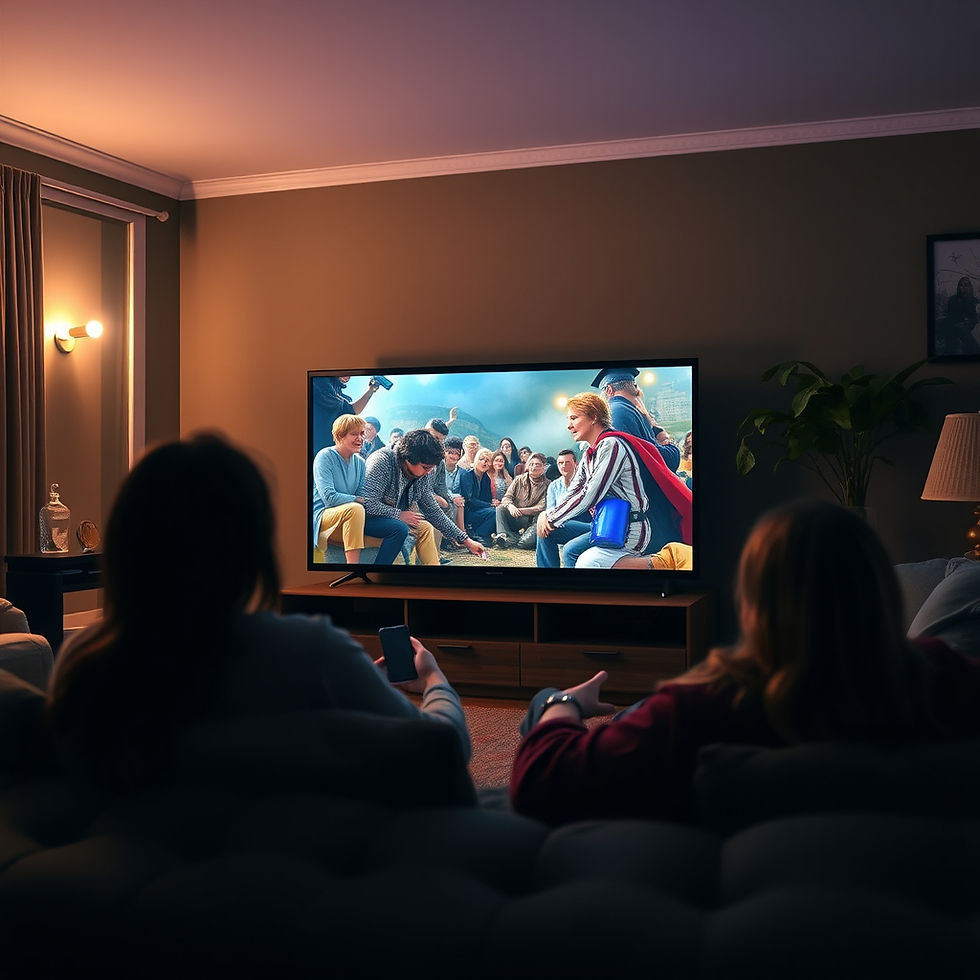
Most learners spend far more time consuming a language than producing it. You binge-watch Bridgerton, listen to podcasts, and maybe even read Harry Potter in a foreign language—and your brain gets very good at recognizing patterns.
But speaking? That's a completely different game. And this is exactly why speaking a foreign language is hard, even for people who understand almost everything.
It's a bit like watching a thousand cooking videos and thinking you're ready for a Michelin-star kitchen. Recognition builds familiarity. Practice builds performance.
Why Does This Happen (And Why It's Not Your Fault)
1. You've trained your brain to recognize, not produce
When you learn mostly through input—videos, apps, and reading—your brain becomes excellent at understanding. But speaking requires recall, and recall is a skill you need to train separately. One doesn't automatically lead to the other. This is the core reason why you can understand English but not speak it.
2. You're trying to build the perfect sentence
I've seen this firsthand. Students who understood almost everything, but the moment it was their turn to speak? Silence. Or the slow-motion panic of someone mentally conjugating a verb in three tenses before committing to a single word. Some were too embarrassed to even try, which is heartbreaking, because the mistake is the lesson.
Real conversation is messy. Native speakers hesitate and rephrase, too, and occasionally just abandon a sentence halfway through and hope nobody notices. (We notice. And it's fine.)
So instead of waiting for the perfect sentence, just start the imperfect one.
3. Fear of mistakes is slowing you down
This one's sneaky. It's not just the fear of being wrong — it's the fear that the other person won't wait. That they'll finish your sentence for you or switch to English just to move things along. Someone once did exactly that to me at the airport in Barcelona.
When this happens, you freeze. You understand everything, but when it's your turn to speak, a small and very loud voice shows up: "Don't say it wrong," and you say... nothing at all.
I learned this with my own students, too. Mid-sentence, they'd pause, searching for a word, and every instinct in me wanted to jump in and help. I had to physically stop myself (occasional hand-slapping included) and just wait. Because if I swooped in every time, I wouldn't have been teaching Spanish. I'd have been teaching them to wait for someone else to do the talking.
The Uncomfortable Truth: Why You Understand a Language but Can't Speak It
Here it is: understanding a language and speaking it are two different skills. You can spend years reading, listening, and studying grammar and still freeze the moment someone expects you to respond.
Passive learning feels productive. And it is, up to a point. But if your goal is actual fluency, not just comprehension, you need to train your ability to respond. Not just understand.
The fix isn't more vocabulary or another grammar lesson. It's speaking. Messy, imperfect, unscripted speaking. That's the only way to close the gap between the language you know and the language you can actually use. These are your improved speaking skills muscles, and they only grow with use.
How to Start Speaking a Language (Without Feeling Awkward)
1. Talk to yourself first
One of the easiest ways to practice speaking alone is to just narrate your day. Describe what you're doing. React to things out loud.
It feels strange for about three minutes. Then it becomes surprisingly useful.
2. Keep it simple—seriously
You don't need advanced grammar to have a conversation. You need usable language.
Instead of "I would have liked to express..."—just say "I want to say..."
Simpler sentences come out faster, and faster is what you're training for. This is one of the most underrated language fluency tips out there.
3. Repeat more than you think you need to
Fluency isn't about knowing something once. It's about being able to use it instantly. Repetition builds that speed.
4. Have real conversations
At some point, you need an actual interaction. This is the part of how to start speaking a language that nobody can skip, and where real progress happens. No shortcut around this one.
Understanding Is Not the Problem — Silence Is
If you can understand a language, you're already halfway there. The vocabulary is in your head. The structure is familiar.
What's missing isn't knowledge. It's use.
So if you've been wondering how to become fluent in speaking, don't focus on learning more. Focus on using what you already know — even if it's imperfect, slow, or a little awkward at first.
That's not failure. That's exactly how fluency starts.
At LinguaHub, we focus on what most learners are actually missing: real speaking practice in a relaxed, supportive environment. Because understanding a language is great, but being able to speak it changes everything.
👉 Get in touch to start speaking with confidence.

Comments